
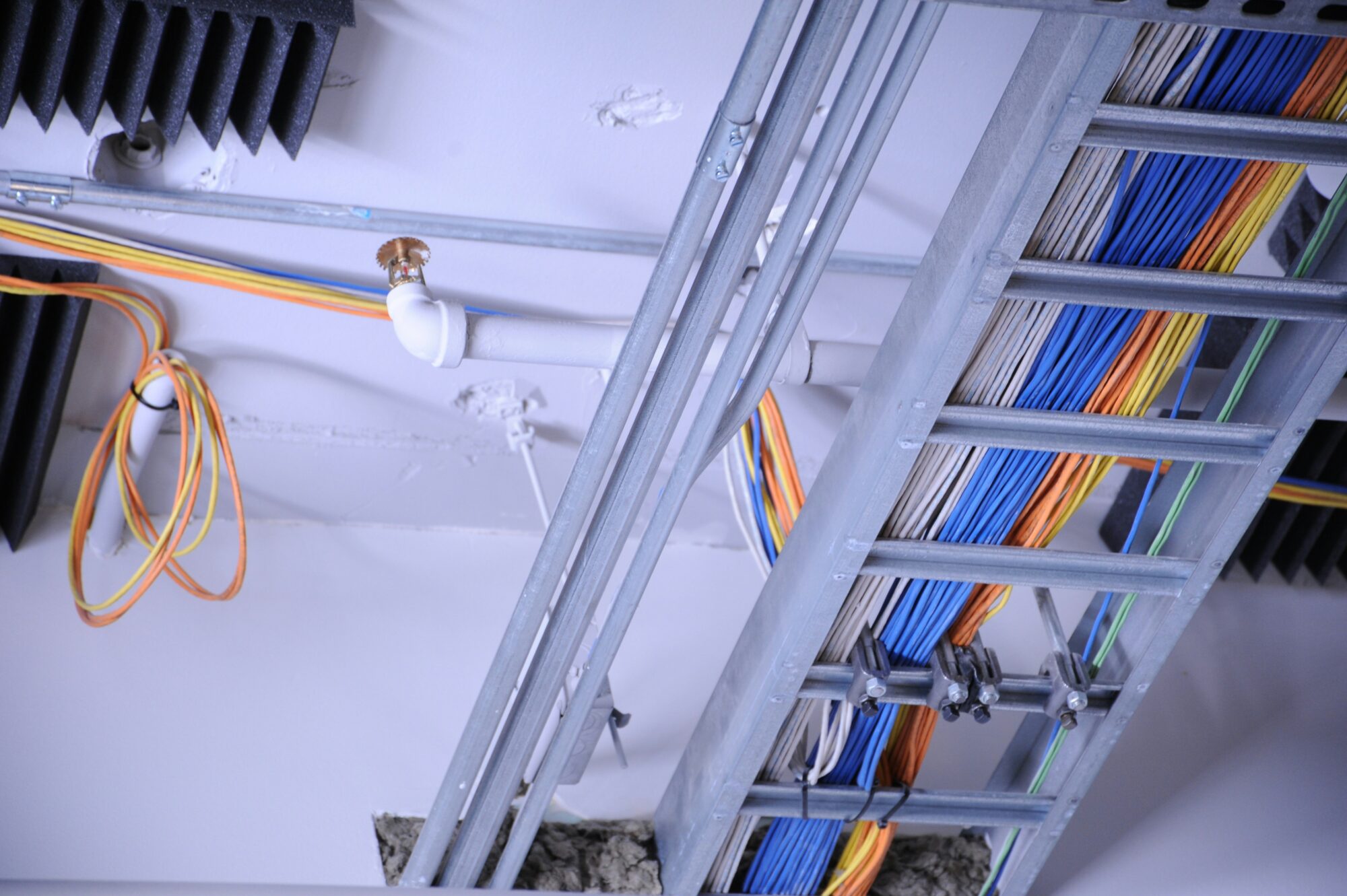
When you walk into a modern office building, warehouse, or retail space in Oxnard or Ventura, you notice the design, the lighting, and the computers on the desks. What you don’t see is the miles of intricate, highly sensitive cabling running behind the drywall, above the drop ceilings, and down into server racks.
This is the low-voltage infrastructure—the nervous system that powers your internet, runs your security cameras, coordinates your building’s climate controls, and keeps your team connected.
If this infrastructure is designed poorly, your business will suffer from dropping Wi-Fi signals, spotty security feeds, and communication bottlenecks. If it is installed incorrectly, you could face costly code violations from local Southern California building inspectors.
Here is everything you need to know about navigating commercial low-voltage systems, ensuring local compliance, and setting your business up for long-term growth.
What is a Low-Voltage Contractor (And How Do They Differ from Electricians)?
One of the most common questions business owners ask is: “Can’t my standard commercial electrician just run my internet and security lines?”
While standard commercial electricians are masters of high-voltage systems—powering your lights, electrical outlets, HVAC units, and heavy machinery—low-voltage contracting is an entirely different discipline.
- High-Voltage Systems (120V to 480V+): Focus on raw power delivery and safety from electrical fires and electrocution.
- Low-Voltage Systems (typically 50V or less): Focus on data integrity, high-speed transmission, signal strength, and system integration.
Low-voltage contractors specialize in structured environments where a minor bend in a fiber optic cable, or running an Ethernet cable too close to a fluorescent light fixture, can completely ruin a network’s performance. Working with a dedicated low-voltage expert ensures your systems are built for data, not just power.
The Anatomy of Modern Commercial Low-Voltage Systems
Every modern workspace relies on an array of integrated technology systems. When planning a commercial buildout or renovation in Ventura County, you must account for these essential low-voltage systems:
- Structured Cabling (The Foundation): The physical network of Category cables (Cat6, Cat6a) and fiber optics that connect your workspace.
- CCTV & Video Surveillance: IP security cameras that require high-speed data connections (often using Power over Ethernet, or PoE) to stream crisp HD video to your server or cloud storage.
- Access Control Systems: Keycard readers, biometric scanners, and electronic door locks that keep your facility secure.
- Audio/Visual (A/V) Systems: Conference room display setups, video conferencing hardware, and sound systems.
- Wireless Access Points (WAPs): Strategically placed ceiling-mounted antennas that distribute robust Wi-Fi across your entire footprint.
What is Structured Cabling, and Why Does Your Business Need It?
“Structured cabling” is a standardized architecture for laying out a building’s telecommunications infrastructure. Instead of running point-to-point “spaghetti” wiring every time you add a new desk or device, structured cabling organizes your wiring into clean, logical pathways, patch panels, and server racks.
The Benefits of a Structured Approach:
- Fewer Downtimes: Organized, clearly labeled racks make troubleshooting a breeze. If an office port goes down, your IT team can trace it back to the patch panel in seconds.
- Unmatched Scalability: Adding a new workstation, moving a department, or upgrading to a 10Gb network is seamless because the underlying cable pathways are already designed to handle changes.
- Reduced Signal Interference: By following strict distance, bend, and termination standards, a certified technician eliminates signal attenuation (weakening) and electromagnetic interference.
Navigating Codes and Permits in Southern California: The C-7 License
In California, low-voltage work is highly regulated to protect property owners and occupants. Anyone performing low-voltage installations exceeding 91 volts or working on systems crucial to communication and data must hold a valid California C-7 Low-Voltage Systems Contractor License issued by the Contractors State License Board (CSLB).
Why the C-7 License Matters:
To obtain a C-7 license, a contractor must demonstrate at least four years of verified journeyman-level experience and pass stringent state exams covering trade-specific standards and California building codes. Hiring an unlicensed handyman or using an uncertified vendor can result in heavy fines, failed city inspections, or voided commercial property insurance policies.
Do I Need a Permit for Low-Voltage Work in Oxnard and Ventura County?
Yes, in most cases. While minor repairs or replacing a single patch cord don’t require building permits, any new installation, major upgrade, or modification of low-voltage pathways requires a low-voltage permit from local city offices (such as the Oxnard Development Services Department or the Ventura Building and Safety Division).
Experienced local contractors like Cami Networks handle the permit, design, and submittal process with local municipalities, ensuring your project passes final inspection without a hitch.
Critical Local Regulations & Safety Protocols
When installing low-voltage cabling in Southern California commercial spaces, compliance with the California Electrical Code (CEC) and NEC Article 725 is mandatory.
1. Cabling in Plenum Spaces vs. Non-Plenum Spaces
In commercial buildings, the space above drop ceilings or below raised floors is often used for HVAC air circulation—this is called a plenum space.
- If a fire occurs, standard PVC-jacketed cables burn quickly and release toxic, blinding smoke into the air ventilation system.
- California code mandates that any cable run through a plenum space must have a plenum-rated (CMP) jacket, which is coated with fire-resistant, low-smoke materials like Teflon. Standard cables are restricted to non-plenum riser spaces (CMR).
2. Separation of High and Low Voltage
Running low-voltage Ethernet or fiber cables alongside 120V or 240V power lines inside the same conduit is a major hazard. It is also a violation of CEC regulations. High-voltage lines emit electromagnetic fields that scramble low-voltage data signals, causing dropouts and slow speeds. Additionally, a short circuit in the high-voltage line could bridge to the low-voltage network, instantly frying expensive IT equipment or causing a fire.
A qualified contractor always maintains the proper separation and uses dedicated pathways.
3. Seismic Bracing Requirements
Living in Ventura County means designing for seismic activity. Local building codes dictate that low-voltage equipment racks, cable trays, and overhead J-hooks must be physically anchored and braced to withstand seismic forces. This keeps your critical communications online during an emergency.
5 Critical Pitfalls in Low-Voltage Installations (And How to Avoid Them)
Understanding these common installation errors can save your business thousands of dollars in retrofitting costs:
| Pitfall | The Consequence | The Solution |
| Using Non-Plenum Cable in Plenum Ceiling Spaces | Failed building inspections, high fire hazard, and code violations. | Hire a certified team that carefully audits air-handling spaces before choosing materials. |
| Routing Near Electromagnetic Interference (EMI) | Data loss, slow network speeds, and endless troubleshooting. | Avoid running data lines directly parallel to power lines, fluorescent ballast lights, or motors. |
| Over-tightening Zip Ties | Can pinch twisted-pair cables (Cat6), fracturing inner copper wires and degrading bandwidth. | Use velcro cable wraps, which hold bundles firmly without compressing the delicate conductors. |
| Ignoring Cable Length Limits | Data packets drop off, leading to severe latency and connection timeouts. | Keep standard Ethernet runs under 100 meters (328 feet). For longer runs, implement fiber optic backbones. |
| Poor Labeling & Documentation | High IT maintenance bills whenever changes or repairs are needed. | Label every single cable drop at both the wall plate and the patch panel according to TIA/EIA standards. |
Trusting Local Experts in Ventura County
Partnering with a licensed local contractor ensures you get an infrastructure built tailored to our unique regional needs—including weather-resistant installations to combat the corrosive, salty coastal air in Oxnard and Ventura.
By trusting Cami Networks with your upcoming structured cabling, security, or office expansion project, you invest in a scalable foundation that will quietly and reliably power your business for years to come.