
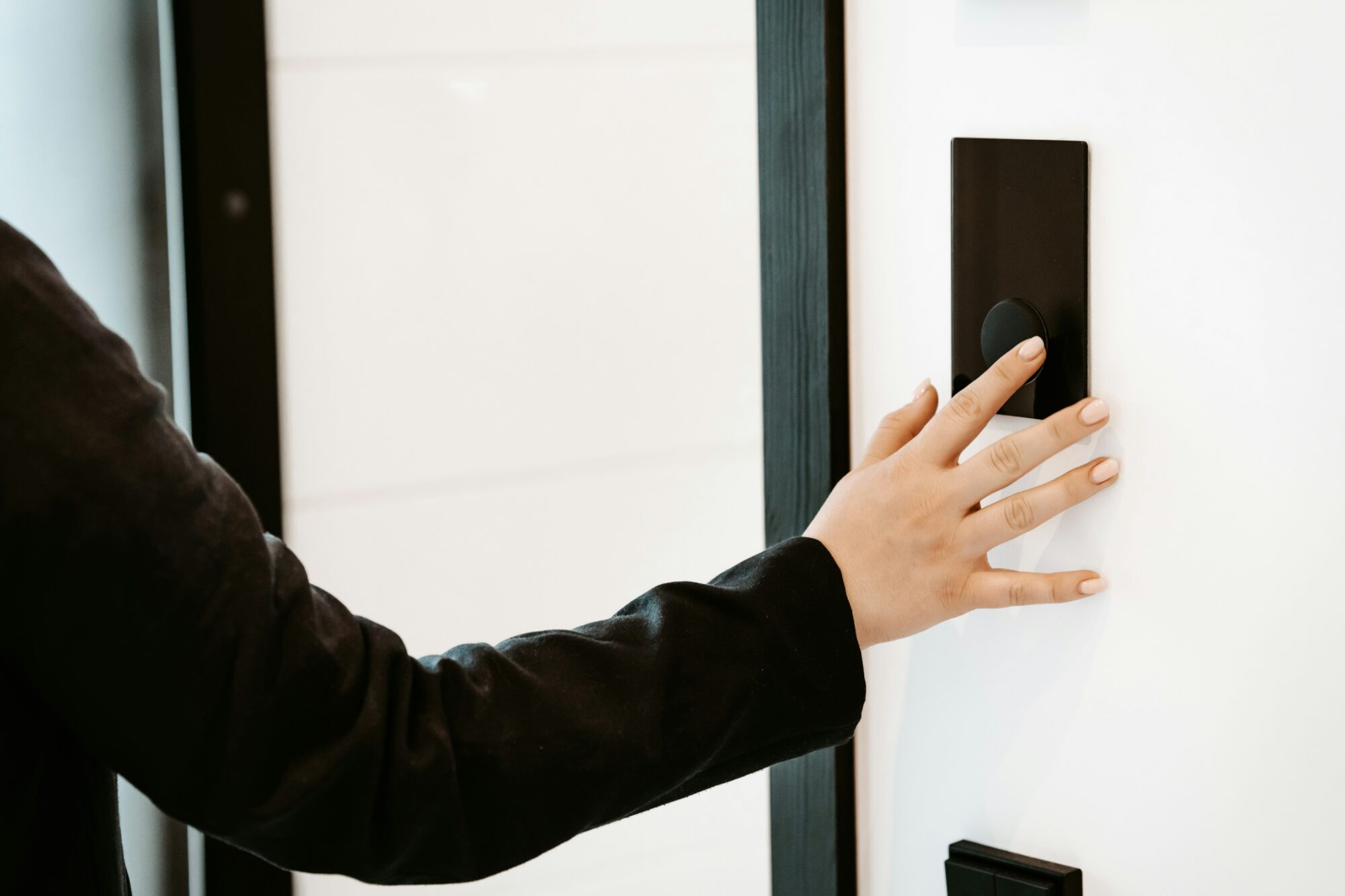
In modern commercial real estate, industrial complexes, and healthcare facilities, the traditional plastic access badge is rapidly becoming an operational vulnerability. Physical keycards are easily misplaced, shared among unauthorized staff, stolen, or cloned. More critically, traditional access control operates in a silo—isolated from tenant management platforms, HVAC optimization, lighting control, and high-resolution video surveillance.
As commercial properties evolve into connected smart ecosystems, physical security is moving from reactive barrier control to intelligent identity orchestration.
Cami Networks, a licensed California C-7 Low Voltage Contractor (License #1128746) based in Oxnard, CA, is leading this shift across Southern California and nationwide. By deploying cutting-edge biometric door hardware, cloud-native access control platforms, and low-voltage Internet of Things (IoT) infrastructure, Cami Networks transforms static facilities into responsive, hyper-secure smart buildings.
The Biometric Shift: Why Physical Credentials Are Being Phased Out
For decades, commercial access control relied on magnetic stripe cards, RFID fobs, or static PIN keypads. However, in high-security environments—such as healthcare campuses, research labs, logistics hubs, and financial data centers—these legacy credentials present clear risks:
- The “Pass-Along” Flaw: A keycard verifies the card, not the person holding it. Tailgating and credential sharing remain primary causes of physical security breaches.
- Administrative Overhead: Replacing lost or unreturned keycards costs property managers thousands of dollars annually in physical inventory, encoding labor, and credential revocation management.
- Friction in User Experience: Building occupants carrying equipment, packages, or medical supplies are forced to stop, locate a badge, and scan at every perimeter door, turnstile, or elevator.
Biometric access control eliminates these friction points by turning the user into the credential.
Core Biometric Modalities Deployed by Cami Networks
Cami Networks designs, installs, and integrates full-spectrum biometric architectures tailored to specific facility operational risks, compliance requirements, and traffic flow needs:
1. Contactless Facial Recognition & 3D Structure Scanning
Facial recognition has fast become the gold standard for high-throughput commercial lobbies, corporate offices, and multi-family developments.
- Hands-Free Convenience: Occupants walk naturally toward speed gates or glass entryways without pausing, pulling out a phone, or touching a scanner.
- Liveness Detection & Anti-Spoofing: Advanced 3D infrared sensing and AI depth mapping differentiate live human faces from high-resolution photographs, videos, or 3D masks.
- High Throughput: Scans and grants access in under 0.3 seconds, drastically reducing front-lobby congestion during peak morning check-ins.
2. Contactless Palm Vein & Iris Scanning
For ultra-high-security zones requiring zero false-acceptance rates—such as surgical suites, server rooms, and defense contractor facilities—Cami Networks deploys advanced optical biometrics.
- Palm Vein Pattern Recognition: Near-infrared light captures the unique internal vascular patterns under the palm’s skin. Because vein structures are internal, they are virtually impossible to forge or duplicate.
- Iris Geometry Recognition: Scans the unique, permanent mathematical patterns within the eye’s iris from a distance, offering extreme accuracy regardless of eyewear, contact lenses, or ambient light.
3. Encrypted Multi-Factor Biometrics
To achieve strict regulatory compliance (such as HIPAA, CJIS, or SOC 2 Type II physical security standards), Cami Networks deploys multi-factor hardware endpoints combining biometrics with encrypted mobile Bluetooth/NFC credentials or temporary dynamic QR codes.
The IoT Architecture: Connecting Biometrics to Smart Building Automation
Biometric endpoints are far more than door openers—they act as intelligent IoT sensors at the edge of the building network. When integrated properly by a low-voltage partner, biometric entry events initiate real-time automation sequences across the property’s building management system (BMS):
Smart Elevators & Destination Dispatch
Rather than allowing unrestricted elevator access, Cami Networks integrates biometric access readers directly with smart elevator controllers. When an executive or tenant scans their face or palm at a lobby turnstile, the elevator control system instantly calls a car, dispatches it to the user’s specific destination floor, and locks out unauthorized floors—maximizing vertical traffic speed and building security.
Occupancy-Driven HVAC and Lighting Control
Biometric IoT events provide precise real-time headcounts per floor or room. By relaying access events to building automation protocols (such as BACnet or Modbus), smart facilities automatically ramp up air conditioning and lighting in occupied zones while switching empty suites to energy-saving eco-modes, dramatically slashing commercial energy costs.
Unified CCTV & Cloud Audit Logging
Every biometric entry event is instantly correlated with HD IP surveillance feeds. If an unauthorized individual attempts entry or a door is forced open (DFO), the system triggers real-time cloud notifications, spotlights the camera feed on the security monitoring wall, and archives an immutable audit log.
Industry Use Cases: Biometrics in Action
| Industry | Primary Security & Operational Challenge | Cami Networks Biometric & IoT Solution |
| Hospitals & Healthcare | Sanitation/germ transmission concerns, restricted drug storage, rapid ER movement. | Contactless facial & palm vein entry for hands-free, hygienic access to surgical units and pharmacy vaults. |
| Commercial High-Rises | Lobby bottlenecks, visitor management friction, tenant turnover admin. | Facial-recognition turnstiles integrated with smart destination elevators and mobile visitor QR passes. |
| Multi-Family Residential | Tailgating, stolen key fobs, unmonitored amenity access (gyms, pools). | Touchless smart-entry intercoms, cloud door administration, and mobile keyless amenity access. |
| Warehouses & Logistics | High employee turnover, shift changes, cargo theft, restricted inventory zones. | High-speed biometric time-and-attendance tracking paired with perimeter access gate automation. |
Structural Infrastructure: The Backbone Behind Biometrics
Biometrics and IoT devices require a robust, resilient physical cabling and network layer. An AI facial recognition camera cannot perform real-time verification if degraded by high-latency cabling or a congested local network.
Cami Networks provides the physical infrastructure necessary to support real-time biometric edge computing:
- High-Power PoE (PoE+ / PoE++): Supplying up to 60W–90W of continuous power and ultra-fast data transport over single Cat6A runs to power thermal biometric readers, door strikes, and illuminators simultaneously.
- Low-Latency Fiber Optic Backbones: Connecting remote building perimeter gates, parking structures, and IDF closets directly to the central MDF server room with zero signal attenuation.
- VLAN Segmentation & Cybersecurity: Isolating biometric database traffic, facial template vectors, and IoT control loops onto encrypted local VLANs to protect tenant biometric data against external cyber threats.
Deploying Next-Generation Secure Access
Building an intelligent, biometric-enabled smart facility requires a low-voltage partner who understands both physical lock hardware and advanced cloud networking.
Whether you are retrofitting a multi-tenant commercial tower in Los Angeles, securing a medical research center in Ventura County, or designing a ground-up IoT warehouse, Cami Networks delivers complete engineering, installation, and system integration.
- California Licensed C-7 Low Voltage Contractor: License #1128746 (Licensed, Bonded, Insured)
- Direct Line: (888) 383-2830
- Headquarters: Oxnard, CA
- Official Website: caminetworks.com